

“Google it,” as a common phrase, is giving way to “Ask ChatGPT,” as users realize they can turn to AI for concise answers without sifting through multiple websites.
The way people access information is rapidly changing, and discovery is no longer limited to search engines. Instead, users are increasingly stopping their search engine journeys at AI overviews or using AI platforms like ChatGPT, Perplexity, and Gemini for answers and recommendations.
Optimizing your website for AI search and AI overviews ensures your brand remains visible, authoritative, and relevant in the new world of intelligent content navigation.
What Are AI Overviews?
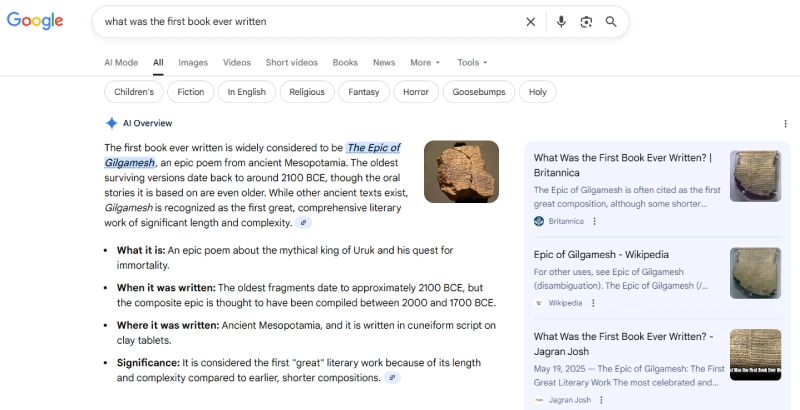
AI Overviews are short, AI-generated summaries that appear at the top of search results pages. They compile information from multiple reputable sources to deliver quick, straightforward answers.
These summaries rely on generative AI models to interpret search intent, analyze data from various sources, and create easy-to-read responses with links for further exploration. According to Google, AI overviews are “designed to show up on queries where they can add additional benefits beyond what people might already get on Search.”
While Google’s Gemini-powered AI Overviews are the most well-known example, other search engines and platforms have similar tools, such as Microsoft Bing’s Copilot.
For content creators and businesses, being included in AI-generated overviews can significantly improve their visibility. Even if a website ranks first in traditional search results or uses paid search, AI overviews appear at the very top of the page and capture users’ attention first.
How to Get Cited in AI Overviews
Getting cited in AI Overviews relies on applying SEO principles that make your content easy to find and understand. While there’s no special markup or process required to appear in AI overviews, search engines pull from high-quality, clearly structured pages that meet their standard technical and content policies.
Here’s how you can increase your chance of being featured in AI overviews:
- Improve Crawlability: Allow crawling in your robots.txt file and through your hosting setup. Then, think about how users move through your site and check that your internal links make it easy to follow the flow from one topic to the next.
- Use Clear Headings and Direct Answers: Frame your sections with question-style headings that match user intent, and follow each with a short, direct answer of around 40 to 60 words.
- Keep Content Authoritative: Add author credentials or background information to show your expertise and make sure your Merchant Center and Business Profile information is up-to-date.
- Strengthen Backlinks and Mentions: AI overviews draw information from credible websites, so encourage references to your content across the web. Guest posts, social engagement, and press mentions help identify your page as a trusted source.
- Research Your Niche: Search your target keywords in incognito mode to see which pages appear in AI Overviews. Analyze how they’re written, formatted, and structured to understand what the AI tends to select and how you can adjust your content.
What are AI Searches?
AI searches are queries conducted by users through AI engines, such as ChatGPT. These engines analyze the question using natural language processing and large language models to understand the intent and context. They then generate a detailed, conversational answer using information from multiple sources and include links or citations for reference.
Instead of relying on traditional ranking signals like backlinks or keyword density, these systems evaluate content based on quality, expertise, and trustworthiness.

Why Are AI Engines Picking Certain Pages Over Others?
Appearing in AI-generated answers doesn’t follow the same fixed rules as traditional search engines. This can feel unpredictable, but it also opens the door to experimenting with new strategies and discovering what resonates with AI systems.
AI engines tend to favor pages that include:
- Clear, well-structured information.
- Direct responses to common questions.
- Updated, trustworthy data and sources.
- Concise explanations with context.
How to Write Content That AI Features
Getting your content recognized by AI engines requires more than traditional SEO, and your website will need to show credibility and usefulness. Here’s how you can make your content AI-friendly and more likely to be featured in answers:
- Create Valuable Content: Pages that answer questions or solve problems are more likely to be recognized by AI engines. Don’t focus on repeating keywords or overloading content. Instead, aim to provide clear and concise information that directly addresses what your audience is looking for.
- Gain Brand Mentions: Reviews, social media coverage, press mentions, and influencer references increase the likelihood that AI tools include your content in responses.
- Utilize Personalization: AI systems tailor answers based on user-specific information like location, age, and preferences, so businesses should create content targeted to specific demographics rather than general audiences.
- Improve Local SEO: When users have location-specific searches, such as a certain service in their city, AI-generated responses will use sources that have implemented local SEO practices. For instance, keeping your business name, address, and phone consistent across pages makes it easier for AI to link your site to location-based queries.
- Choose Topics over Keywords: Focus on user intent and subject areas rather than individual keywords to provide comprehensive coverage that answers a range of questions and establishes topical authority.
- Adjust formatting: Organize your content with clear H2 and H3 headings to create a logical hierarchy, and use occasional bullet points or numbered lists to highlight steps, examples, or important takeaways.
- Create Citable Content: Pages with original research, expert insights, and verifiable claims are more likely to be referenced by AI. Show that your content is credible by including studies with data, quotes from recognized authorities, and links to trusted sources.
- Incorporate Visuals and Multimedia: Use images, screenshots, charts, tables, and videos with transcripts to present complex information clearly and make it easier for AI systems to interpret and extract key points.
When to Refresh Old Content for AI Overviews and AI Searches
AI systems favor pages that reflect the latest information. Over time, even strong-performing content can lose relevance as statistics and trends evolve.
Use these signs to decide when to refresh your existing website content:
- If your content is over a year old → Check all statistics, case studies, and references, and update anything that’s changed or could mislead readers.
- If your traffic has dropped → Revisit the page to restructure or reword headings, or add new sections that reflect the latest trends related to your topic.
- If user behavior indicates intent gaps → If you notice high bounce rates or low engagement, your content may not align with user needs. Adjust and rewrite sections that directly address the questions users are seeking answers for.
- If there are new developments → If recent studies, trends, or industry updates emerge, update your content with new sections to maintain relevance.
Adapting Your Content for AI Discovery
The future of search relies heavily on AI, and businesses need to adjust their content strategies to align with how these systems interpret and gather information.
Adapting for AI Overviews and AI searches involves keeping foundational SEO in place while reframing your content for GEO optimization and meeting AI’s emphasis on clarity and user intent. Doing so ensures your brand stays visible as AI becomes one of the primary ways people seek answers.
For additional marketing insights and strategies, explore our blog, where you’ll find practical guidance and expert tips to help you strengthen your content, engage your audience, and stay on top of marketing trends.