

Brand values are the guiding principles that define what your company stands for and how it behaves. They shape decisions, culture, and how your brand is perceived by everyone who interacts with it.
Clear brand values create a strong sense of identity and purpose, and help establish loyalty among your customers, employees, and partners.
Explore our comprehensive list of brand value examples and learn how to apply them to guide strategic decisions and give your business a competitive advantage within your industry.
Categories and Examples of Brand Values
We’ve grouped our list of values by the role they play in a brand, rather than by tone or emotion, helping you decide what can define your business rather than what simply supports how you operate.
Ethical Foundation
Ethical values define how your brand behaves in every situation. Ethical actions make clients feel confident in doing business with you, and employees feel proud to work for you. Research shows that consumers are willing to pay more for brands they perceive as sustainable and trustworthy, while employees stay longer when they respect the company’s values.
Brands that live by their ethical values gain loyalty and respect, while those that don’t risk losing both.
Examples of Ethical Brand Values
- Honesty
- Integrity
- Accountability
- Transparency
- Fairness
- Responsibility
- Respect
- Trust
- Ethics
- Duty
- Privacy
- Safety
- Sincerity
- Sustainability
- Truth
How to Put These Values Into Practice
- Don’t hide important details and be upfront about aspects such as product limitations or additional fees so your customers don’t feel deceived.
- Stick to your principles, even when cutting corners seems easier. For example, if you notice a mistake in your product or service, fix it openly and show accountability.
- Own your mistakes. When something goes wrong, address it quickly and explain how you’re preventing it in the future.
- Treat everyone well, including your team, your clients, and even competitors, through small actions like fair pay, inclusive policies, and quick responses to feedback.
- Protect people’s data and well-being by handling personnel information carefully and respectfully.
- Make sure your marketing, messaging, and actions match what you actually do, and don’t promise more than you can deliver.

Google demonstrates that its values focus on ethics and responsibility by protecting users, providing opportunities, and creating positive social impact. Source
Human Connection and Culture
Human connection and cultural values shape how employees, customers, and anyone interacting with your brand feel.
Customers notice and remember brands that make them feel valued and understood, and they’re more likely to return or recommend your business, helping you establish lasting relationships.
Examples of Human Connection Values
- Compassion
- Empathy
- Belonging
- Warmth
- Kindness
- Acceptance
- Inclusion
- Generosity
- Gratitude
- Love
- Community
- Relationships
- Unity
- Family
How to Put These Values Into Practice
- Schedule time with employees and customers to ask open-ended questions about their experiences and suggestions, and use what you learn to make tangible changes.
- Create an environment where everyone feels welcome and valued through actions such as inclusive policies and open communication.
- Use customer data thoughtfully to tailor interactions. Remember names, preferences, past purchases, or milestones and send a personalized note or recommendproducts based on a customer’s specific interests.
- Publicly celebrate team achievements, thank clients for their loyalty, and offer small tokens of appreciation, such as discounts or shoutouts.
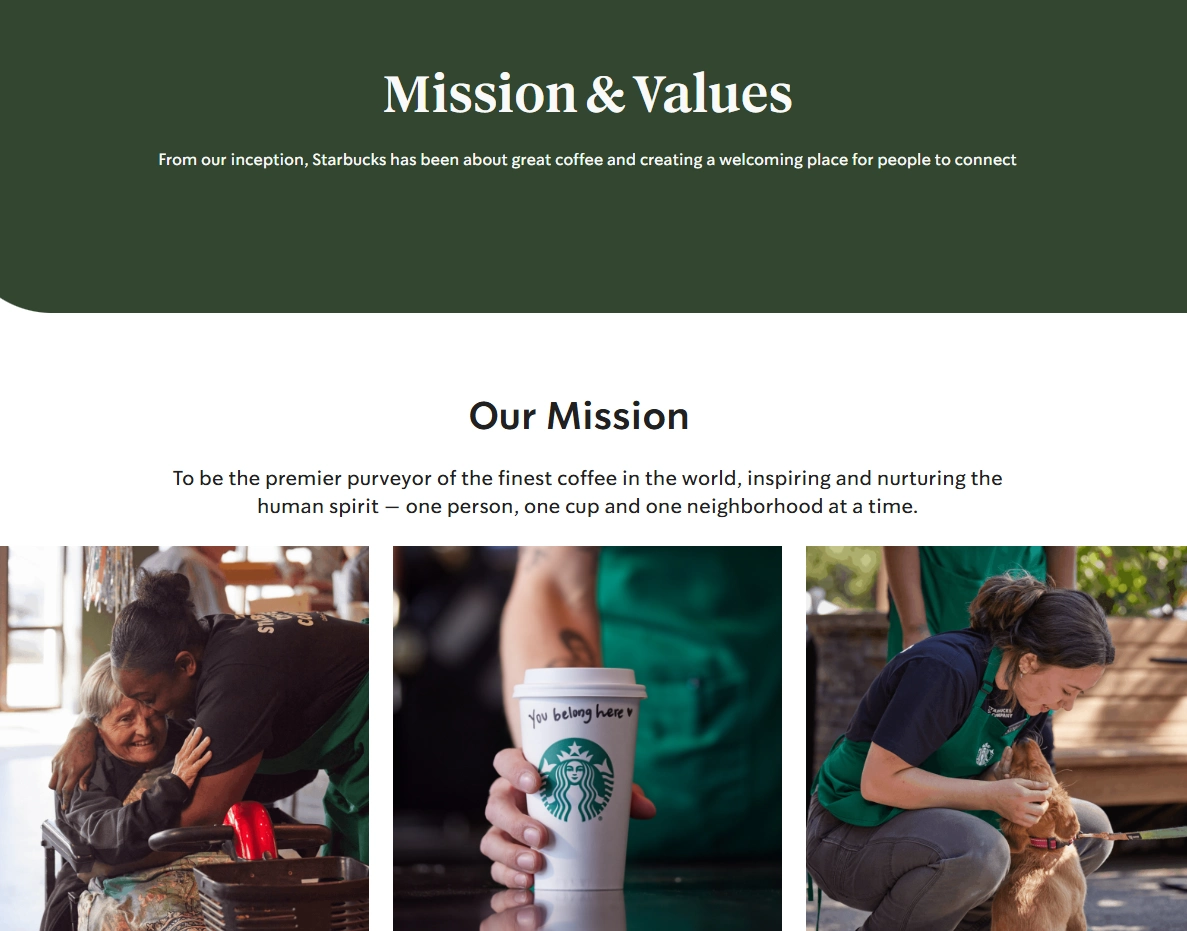
Starbucks demonstrates human connection values by creating a welcoming atmosphere and prioritizing meaningful experiences that make people feel included and valued. Source
Craft, Quality, and Professionalism
Craft, quality, and professionalism describe how your brand approaches every task and the standards it holds itself to. They show up in the consistency and reliability people experience every time they interact with your team, products, or services. When your brand demonstrates these values, clients and employees know they can count on you to deliver exceptional work.
Careful attention to detail and a commitment to excellence also build confidence in your brand and inspire loyalty. Clients feel reassured by experiences that are dependable, polished, and thoughtfully executed, and will be more likely to return to your business.
Examples of Quality and Professional Values
- Quality
- Precision
- Attention to detail
- Craftsmanship
- Excellence
- Discipline
- Dependability
- Professionalism
- Accuracy
- Mastery
- Reliability
- Consistency
- Skill
How to Put These Values Into Practice
- Prioritize delivering consistent work that meets or exceeds expectations.
- Encourage skill development, continuous learning, and pride in doing work well across your workforce.
- Standardize processes and create templates, checklists, or SOPs to deliver the same quality every time.
- Focus on quality control throughout operations to deliver the same high standard across every product, service, and customer touchpoint.

Rolex demonstrates craft and professionalism through its focus on precision, reliability, and durability, with every watch reflecting extremely high standards of quality. Source
Growth, Progress, and Ambition
Growth, progress, and ambition values show that your brand moves forward and pursues long-term goals. These values can inspire your team and show audiences you are ahead of the curve, or at least keeping up with the pace of change in your industry. Brands that embrace these values signal that they’re committed to continuous improvement and innovation in their strategies, services, products, culture, and technology.
When a brand demonstrates perseverance and a strong vision for its future, it earns confidence, respect, and excitement from both internal and external audiences.
Examples of Growth and Ambition Values
- Innovation
- Curiosity
- Exploration
- Discovery
- Progress
- Ambition
- Entrepreneurship
- Learning
- Intelligence
- Vision
- Potential
- Perseverance
- Drive
- Evolution
How to Put These Values Into Practice
- Give teams space to test ideas, ask questions, and challenge assumptions.
- Support skill-building, training, and personal growth opportunities.
- Celebrate creative solutions and bold initiatives, rewarding initiative and forward thinking.
- Communicate long-term goals so employees and clients understand where the brand is headed.
- Track growth, celebrate milestones, and continuously improve processes, products, and services.

Apple demonstrates growth and ambition through its focus on continuous innovation, responsible leadership, and long-term visions. Source
Energy, Expression, and Personality
Energy, expression, and personality value the influence, tone, and emotional impact you leave on employees, clients, and anyone interacting with your brand. When done well, these values make your brand memorable and engaging.
A brand that expresses creativity or boldness creates excitement and joy. Employees feel energized and inspired when they work in a culture that encourages playfulness and enthusiasm, while clients are drawn to brands that feel lively, authentic, and distinctive.
Examples of Energy and Personality Values
- Creativity
- Playfulness
- Joy
- Fun
- Excitement
- Boldness
- Imagination
- Originality
- Enthusiasm
- Liveliness
- Wonder
- Zest
- Fascination
- Humor
How to Put These Values Into Practice
- Share behind-the-scenes glimpses or lighthearted content that showcases your brand’s friendly and down-to-earth culture.
- Use a friendly, approachable tone in emails, social media, and customer support instead of generic, robotic messages.
- Celebrate achievements, use humor when appropriate, and make interactions enjoyable for employees and clients alike.
- Don’t shy away from taking smart risks or trying fresh approaches in marketing, product design, or service delivery.
- Choose bold colors, graphics, and layouts in marketing materials that feel lively and reflect your brand’s character.
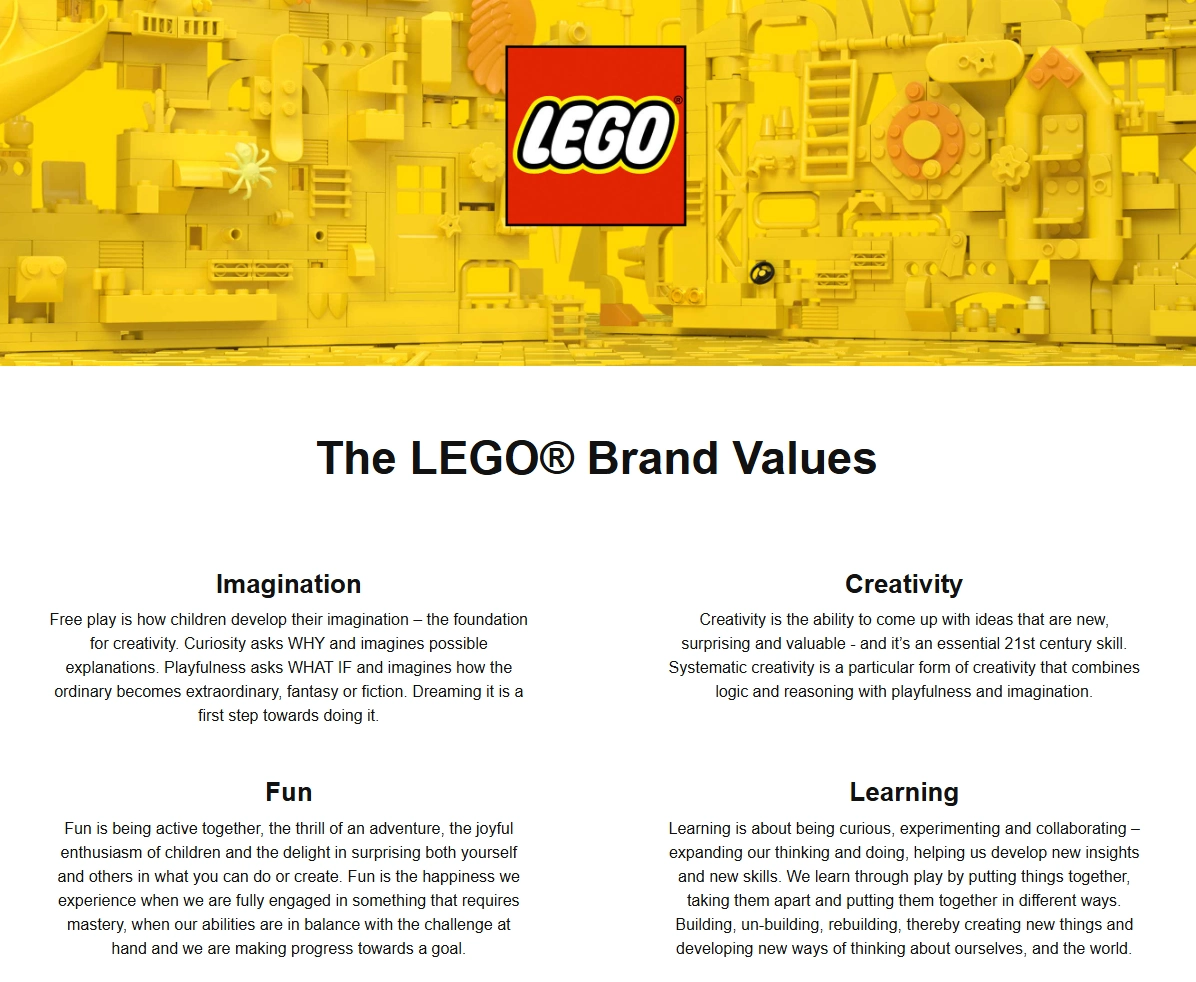
LEGO brings its brand to life with playful creativity and imagination, making every experience fun and inspiring for people of all ages. Source
How to Identify Key Brand Values in Your Business
Many founders make the mistake of trying to create brand values from scratch. The truth is, your values already exist, and they’re reflected in how you run your business and how your customers experience your brand.
The challenge is to identify and describe them so they can guide your business decisions and strategies.
1. Start With Self-Reflection
Begin by looking inward and consider what drives your business, what principles you and your team care about most, and what you stand for.
Ask:
What does our company truly stand for?
What matters most to me as the founder?
What do I want our brand to be known for?
What practices or behaviors do we refuse to compromise on?
What excites and motivates me about this business?
What principles guide our decisions and behavior?
What actions or policies reinforce our values?
How do our values impact society or our industry?
Self-reflection helps uncover values that are authentic and unique to your company, rather than generic industry buzzwords.
2. Listen to Your Customers
Your clients’ perceptions can reveal what your brand naturally embodies, so create surveys for them to complete for additional insight.
These surveys can include questions related to why customers choose your products or services over competitors, and what they value most about their experience with your company.
Look for repeated themes and patterns in responses, as these can highlight strengths, values, and behaviors your brand is already expressing. Use these insights to reinforce what works and adjust areas that fall short.
3. Examine Current Practices
Your core brand values may already be hidden in your operations and culture, and you can uncover and reinforce them.
Look at what your business already does and why, and think about what values it can already relate to:
Do you ship products within 24 hours? That may reflect a value of timeliness.
Do you use ethically sourced materials? That likely signals responsibility and sustainability values.
Are you consistent in communication, problem-solving, or service? These point to reliability and professionalism.
Is your pricing or fees straightforward? That indicates transparency.
Do you invest in regular training for your employees? That shows you value long-term growth and development.
After pinpointing values that already exist, take steps to embed them in other processes and build upon them in new initiatives such as marketing campaigns or product launches, and assess audiences’ responses.
Sometimes efforts don’t work because the execution doesn’t feel authentic, the value isn’t clearly communicated, or it clashes with existing practices. Other times, initiatives succeed because they genuinely reflect what your brand stands for and connect with your audience.
Making Brand Values a Part of Your Business
When integrated within a business, values move from words on a page to tools that shape your brand. Leaders should model them, hiring should reflect them, and every decision, customer interaction, and internal process should align with them. Applying brand values can be a long process, but it can pay off through increased loyalty and a stronger identity.
Explore other ways to strengthen your brand with our blog, which covers everything from ethical advertising to building brand trust.